
Hot Water Systems Sized for Actual Demand
Water Heater Installation in Lawrence for replacement units and new system setups
Households run out of hot water mid-shower, businesses struggle with inadequate supply during peak hours, or aging tanks begin leaking before complete failure occurs. SuperDan Plumbing LLC installs water heaters matched to consumption patterns and property requirements across Lawrence, Kansas, where selecting appropriate capacity and fuel type determines whether hot water meets demand reliably. Installation includes removing old equipment, fitting new units to existing or upgraded supply lines, configuring safety controls, and verifying combustion venting or electrical connections comply with current standards.
Professional installation prevents issues that appear months later—undersized tanks that recover too slowly, improperly vented gas units that create carbon monoxide risks, loose electrical connections that trip breakers, or pressure relief valves installed without proper discharge routing. The process involves calculating peak demand based on fixture count and usage patterns, confirming adequate gas line diameter or electrical service capacity, and positioning the unit where code clearances and maintenance access requirements are met.
Arrange an on-site consultation to evaluate your current hot water usage and identify the system type and capacity that fits actual demand.
How Installation Addresses Equipment Selection and Safety

Installation starts with confirming fuel source compatibility, measuring available space, and testing supply line pressure before disconnecting the old unit. Each connection follows manufacturer torque specifications, gas joints receive leak testing with pressure gauges, and temperature-pressure relief valves are positioned to discharge safely outside or into proper drains. Venting for gas units must terminate according to clearance tables that account for Kansas winter conditions and prevailing winds.
Once installation finishes, you notice hot water reaches fixtures faster if the new unit sits closer to demand points, showers maintain temperature without fluctuation when capacity matches usage, and recovery time between uses shortens with properly sized equipment. Tanks no longer make popping or rumbling noises caused by sediment buildup in old units, and energy consumption often decreases when replacing older models with current-efficiency systems.
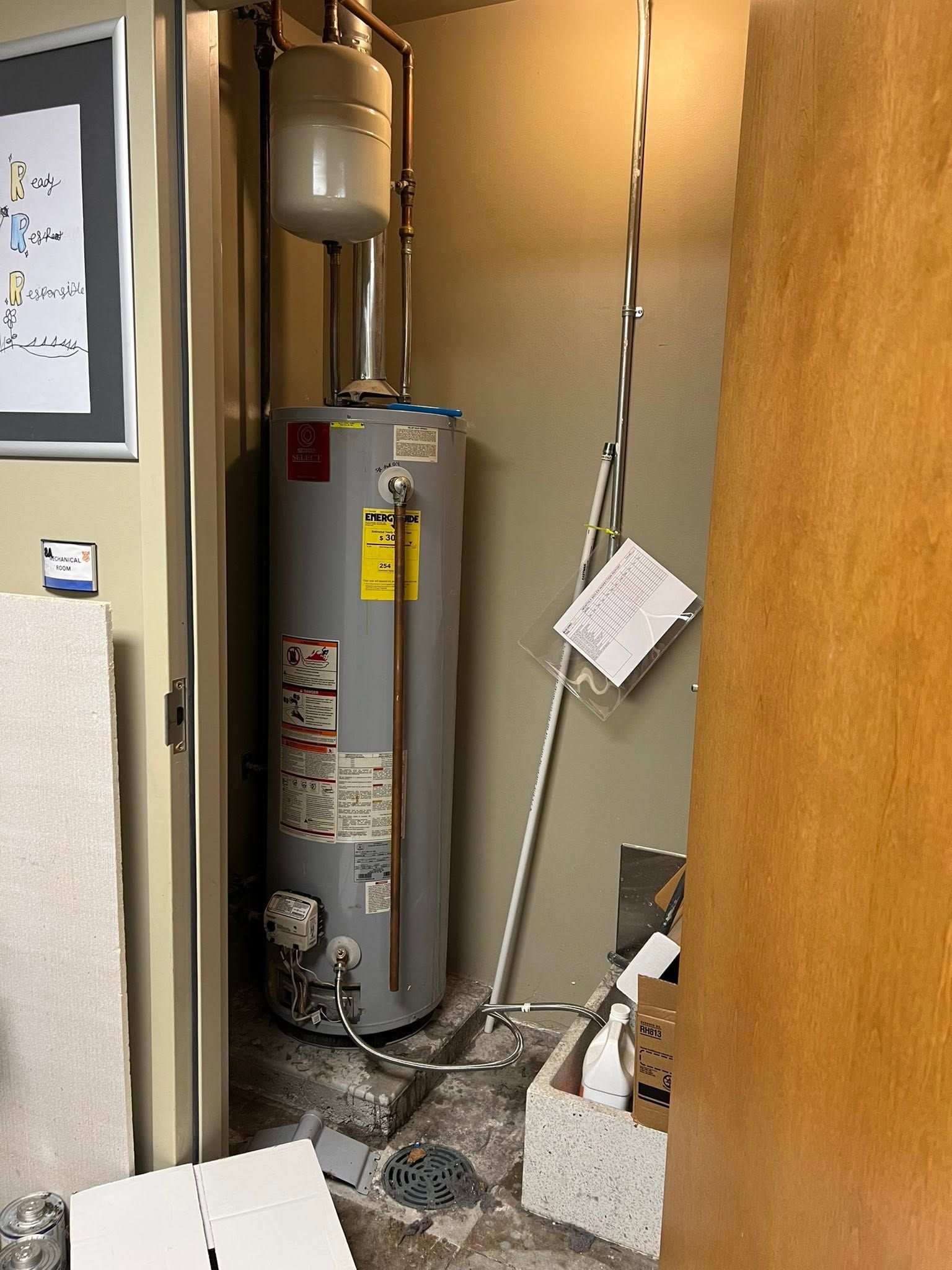
Installation includes setting the thermostat to manufacturer-recommended temperatures that balance scald prevention with bacteria control, flushing the tank to clear installation debris, and labeling shutoff valves for future maintenance access. Some installations require expansion tanks to protect against thermal expansion in closed systems, while others need upgraded venting materials or combustion air modifications to meet updated code provisions.
Common Questions About This Service
Water heater installation involves choices about equipment type, fuel source, and configuration that affect performance and operating cost.
What factors determine the right water heater size for a home?
First-hour rating must exceed peak demand, calculated by counting fixtures likely to run simultaneously—two showers, dishwasher, and washing machine during morning routines typically require 60-80 gallon capacity for tank-style units or appropriately rated tankless systems.
How does fuel type affect installation requirements?
Gas units require venting through roofs or exterior walls with specific clearances, combustion air provisions, and gas line sizing verified with pressure testing, while electric units need correctly sized breakers and wiring but skip venting entirely.
When should property owners in Lawrence consider tankless versus tank-style water heaters?
Tankless systems work well for properties with limited space or consistent low-volume usage but require higher upfront cost and adequate gas line capacity, while tank-style units cost less initially and handle high-volume bursts more easily.
What preparation does installation require before the appointment?
Clear access to the installation area, confirm water shutoff valve operation, and remove items stored near the old unit so removal and new equipment positioning proceed without delays.
How long does a typical residential water heater installation take?
Straightforward replacements with compatible connections usually complete within a few hours, while installations requiring venting modifications, gas line upgrades, or expansion tank additions extend to a full day depending on system complexity.
SuperDan Plumbing LLC evaluates existing conditions, discusses capacity needs, and explains equipment options during consultations throughout Lawrence. Schedule a water heater installation consultation to review system types, sizing calculations, and installation details specific to your property.